
Switching strategies feels productive. It rarely is. The uncomfortable truth is that the chart pattern is almost never the bit that's broken — it's what you do aroundthe trade. The entries you took when you shouldn't have. The stops you moved. The size you bumped after a loss. That's where the money goes.
The real reason traders lose
Sit down with any losing trader's history and you'll see the same handful of behaviours showing up over and over:
Overtrading
You had two clean setups today. You took eleven. The market wasn't giving you nine more — boredom was. Most "bad days" aren't bad market days. They're days where you traded when you shouldn't have.
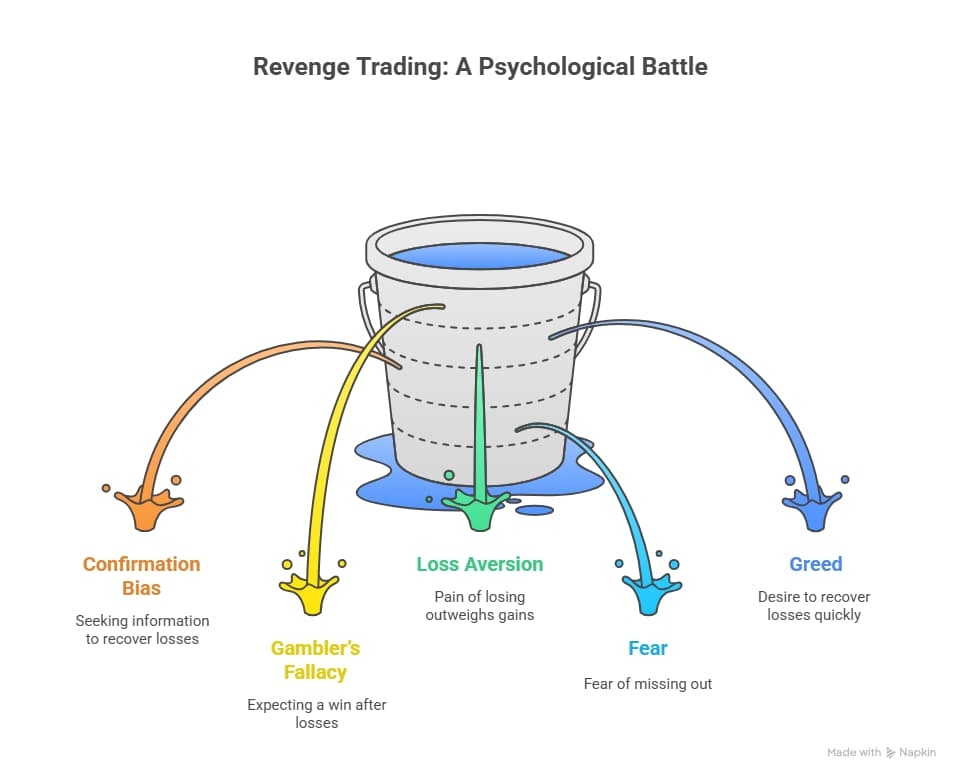
Revenge trading
You take a loss. It stings. Two minutes later you're back in — bigger size, worse entry, no plan. You're not trading anymore. You're trying to get even with the market. The market doesn't care.
Breaking your own rules
You said max risk per trade is 1%. You took 3%. You said no trading after a loss. You did anyway. The rules weren't wrong. You just didn't follow them.
Not sticking to the plan
You planned the entry, the stop, the target. Then price moved a bit and you bailed early. Or moved your stop. Or held past your exit "just to see." The plan only works if you actually let it.
The psychology behind it
Loss aversion
Losing $100 hurts about twice as much as winning $100 feels good. That's not weakness — that's how human brains are wired. The problem is you act on that pain. You hold losers hoping they come back. You snatch tiny wins because you're scared they'll vanish.
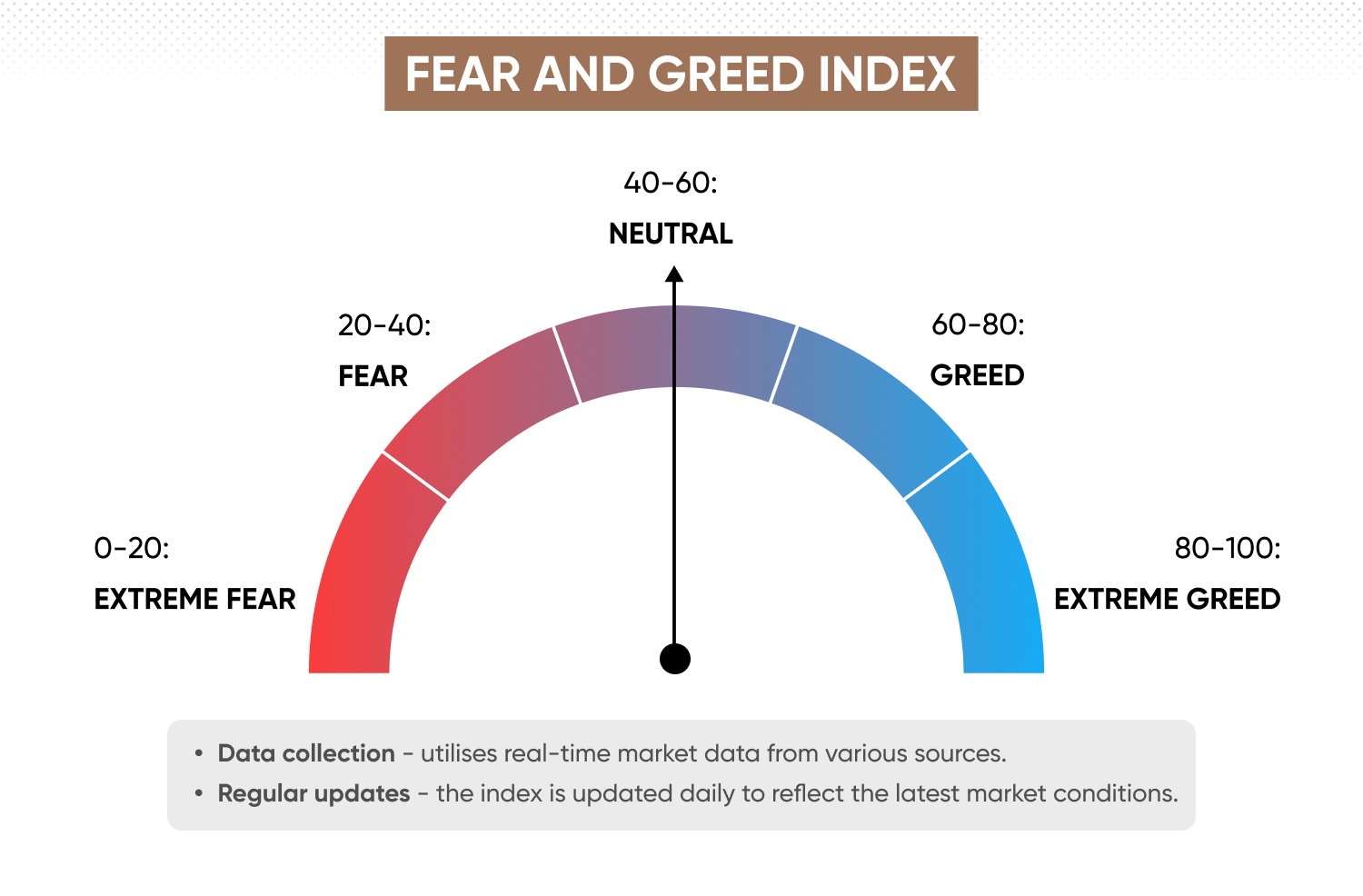
Fear and greed run the show
Most days you're not really choosing trades — fear and greed are choosing them for you. Greed when price runs without you. Fear when you're already in and it ticks against you. Same chart, totally different decisions, depending on which one's louder in your head.
Why people repeat mistakes
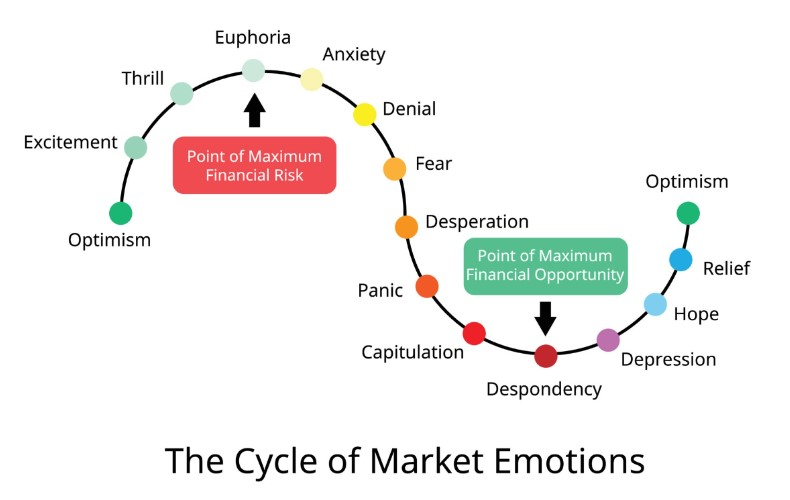
Because most traders never actually see the pattern. They remember the trade, not the state of mind. So next week, same emotion shows up, same decision gets made, same outcome happens. And they call it bad luck.
Why strategy isn't enough
A profitable strategy run inconsistently is a losing strategy. Even a 70% win rate system will bleed you dry if you skip the losers, double up on tilt, and exit winners at break-even. The edge lives in execution, not in the chart pattern.
Two traders, same exact setup, same broker, same instrument. One's profitable, one isn't. The difference is almost never the strategy.
What actually fixes it
Awareness
You can't fix a habit you don't notice. Step one is catching yourself in the moment — "I'm about to revenge trade." That alone changes behaviour over time.
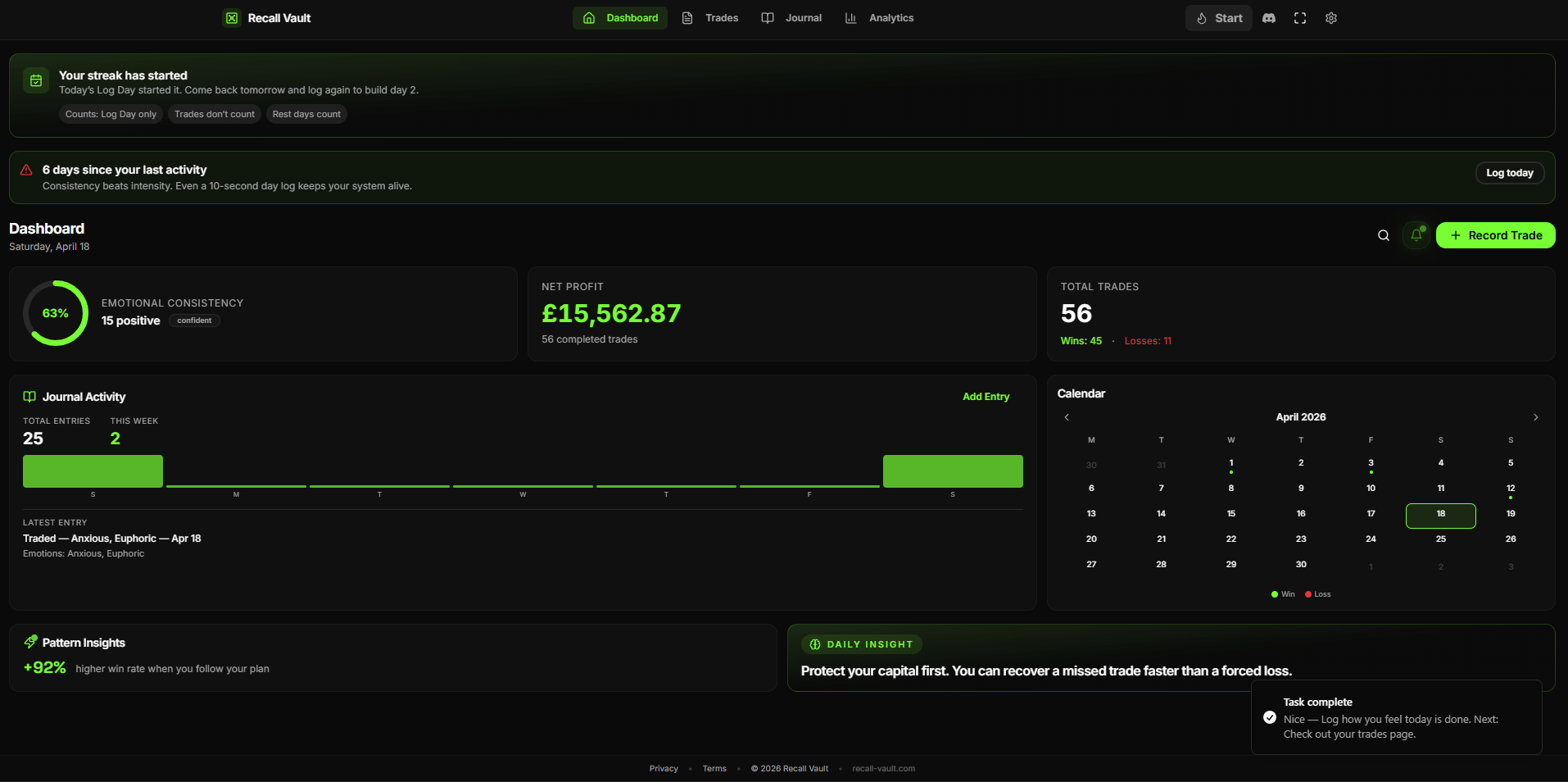
Tracking behaviour, not just trades
Most journals log entry, exit, P&L. Useful, but it tells you what happened, not why. The bit that matters is the emotional state and the decision-making behind each trade.
Reviewing mistakes honestly
Not "the market took my stop." That's a story. Try: "I sized up because I was down for the day." That's the truth, and it's the only thing you can actually act on.
Seeing patterns over time
One bad trade is noise. Twenty bad trades all marked "FOMO" is a signal. Patterns only show up when you record consistently and look back.
The takeaway
It's not your strategy. It's your behaviour. Fix the behaviour and the results follow — usually with the same strategy you already had.
Stop hunting for the perfect setup. Start watching the trader using it.